Expense Tracker Web App Project
A Next.js expense tracker with authentication, transactions, dashboard summaries, history, and responsive MongoDB-backed screens.
Project image carousel
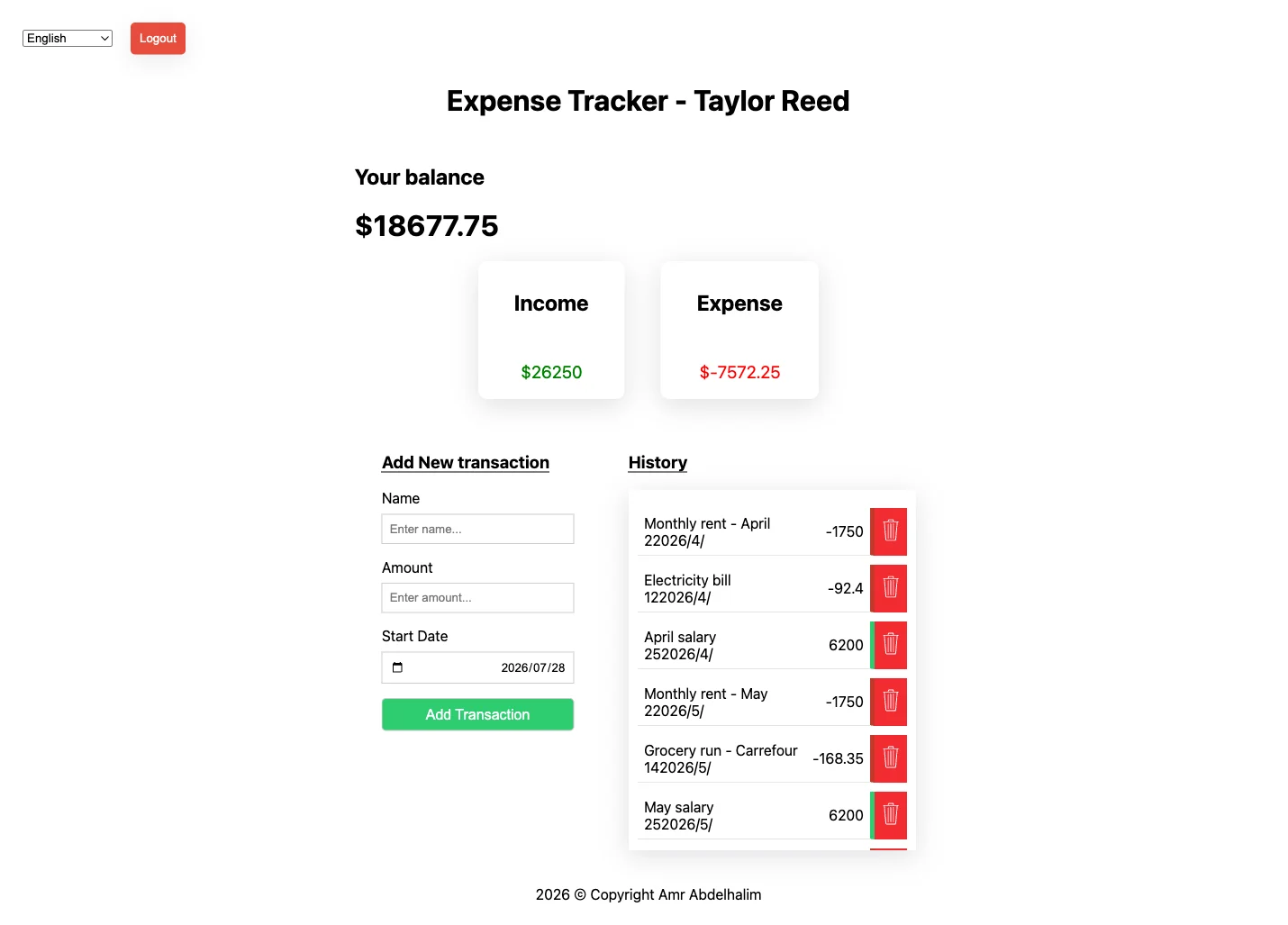
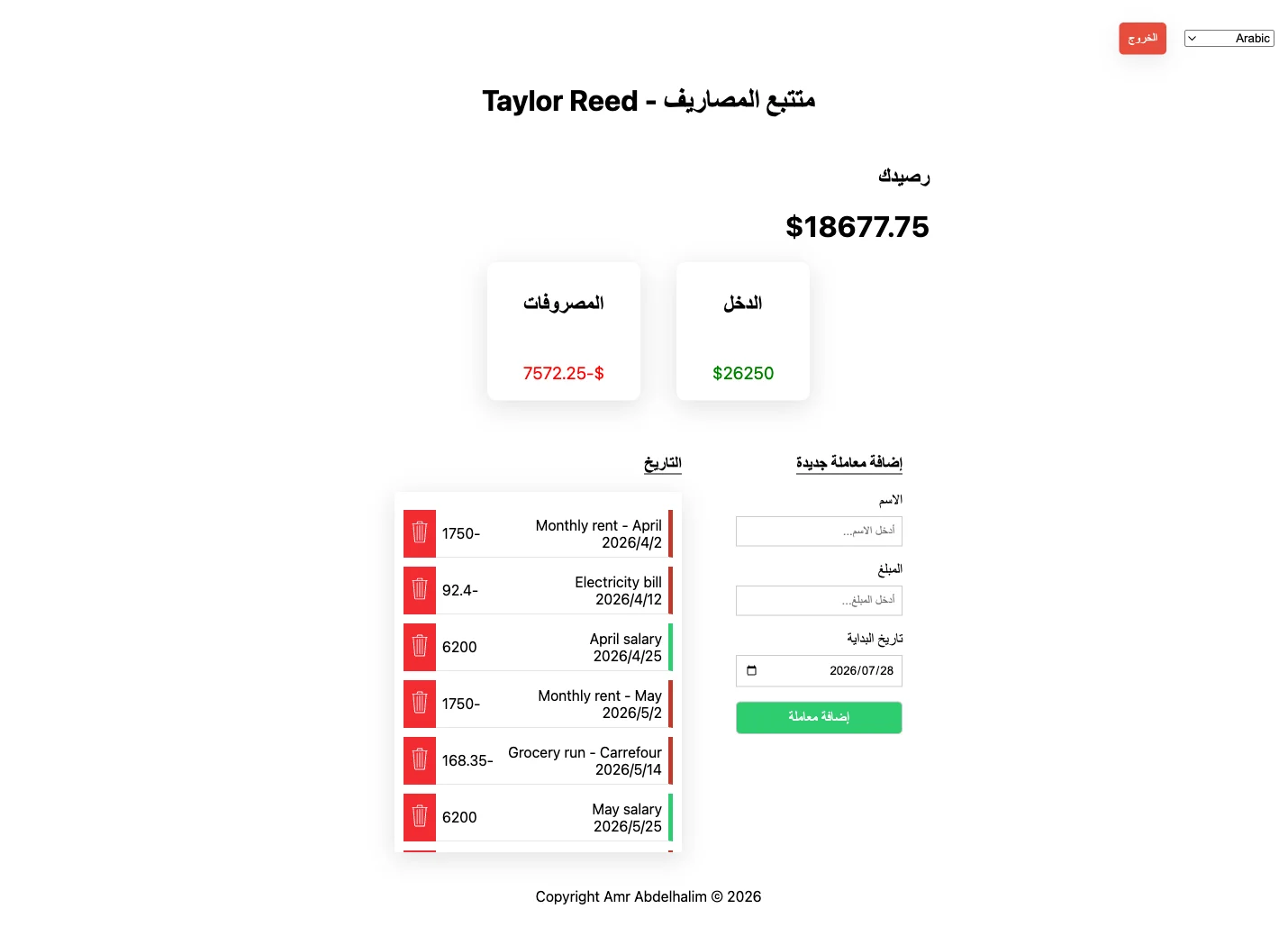
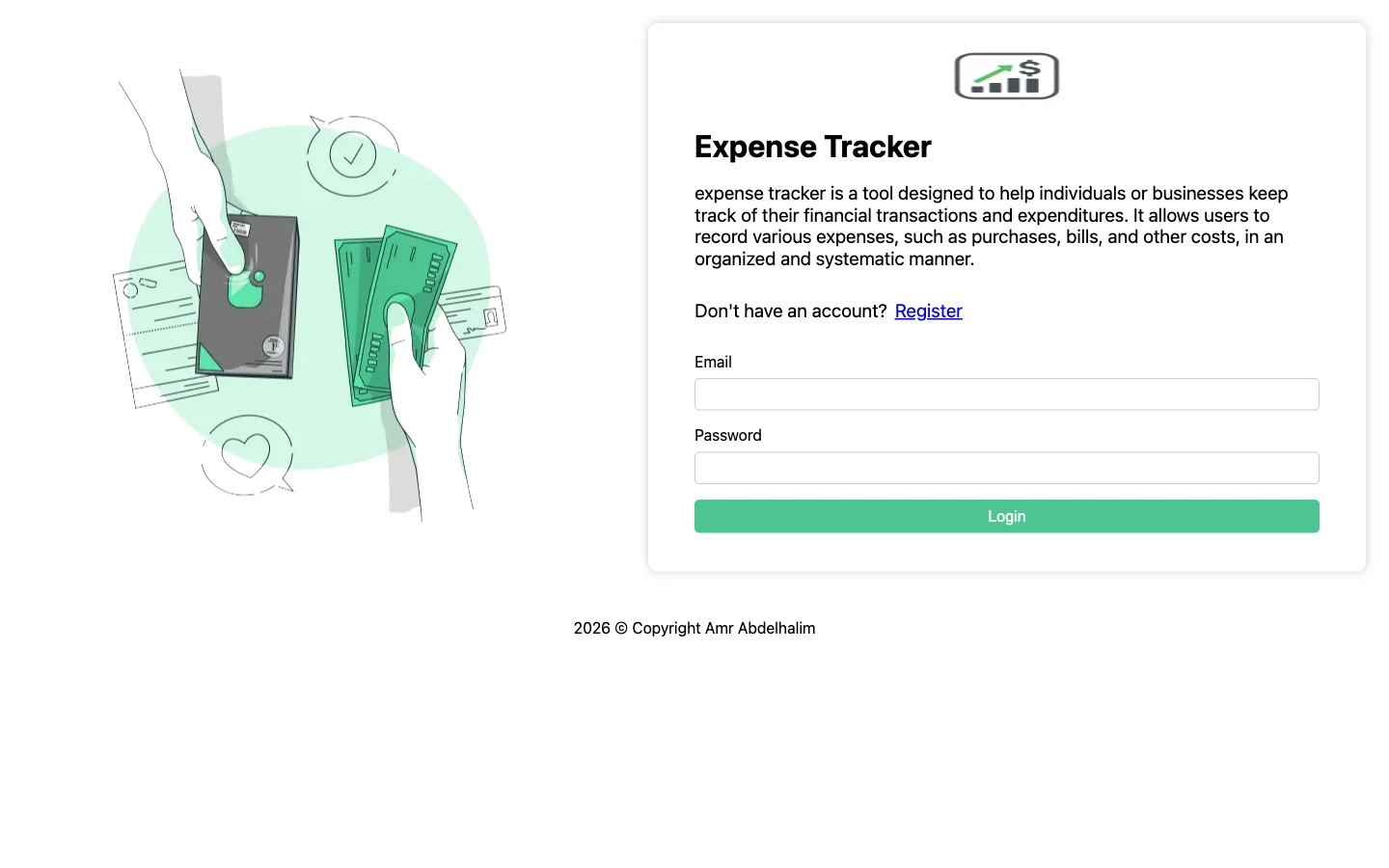
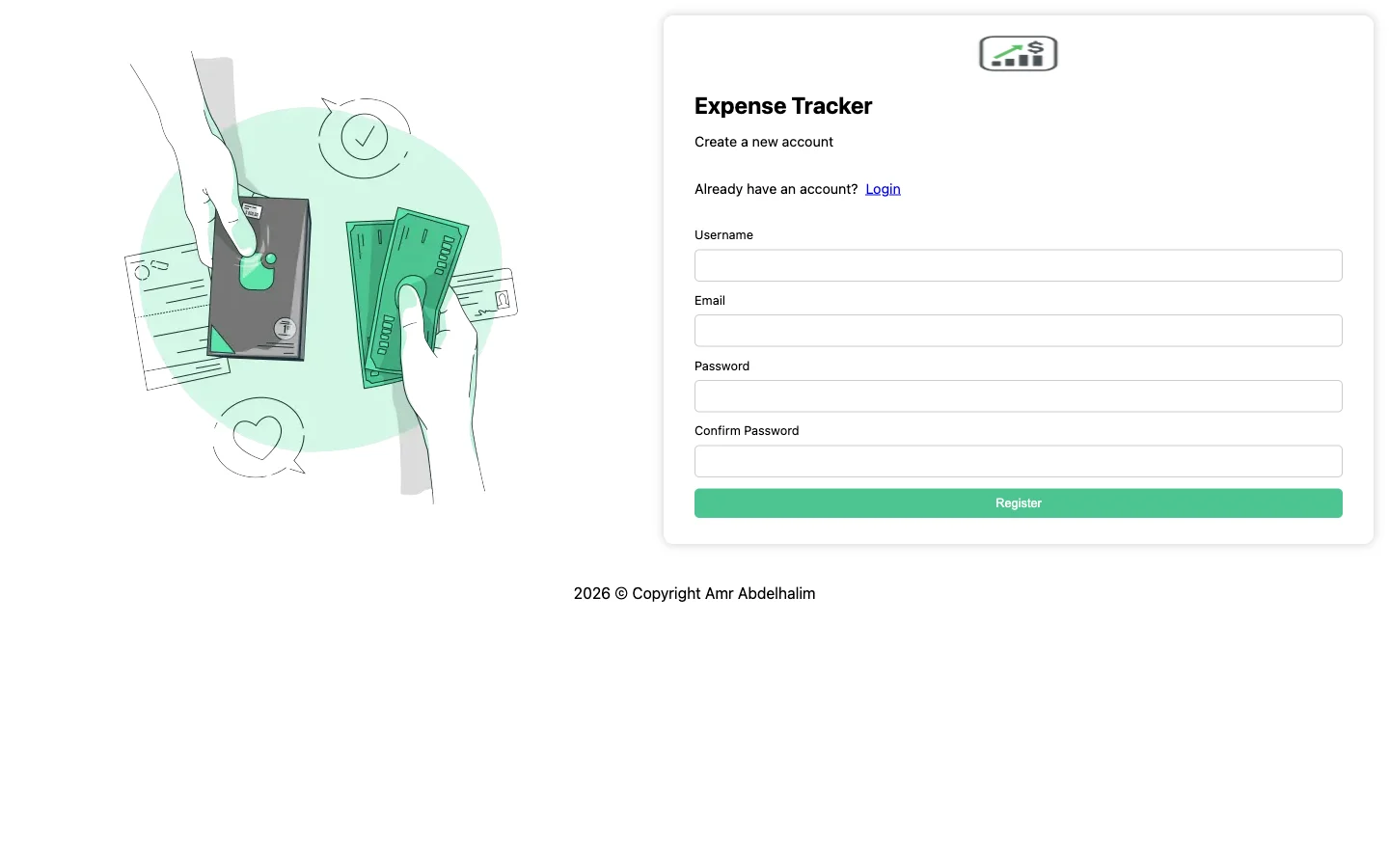
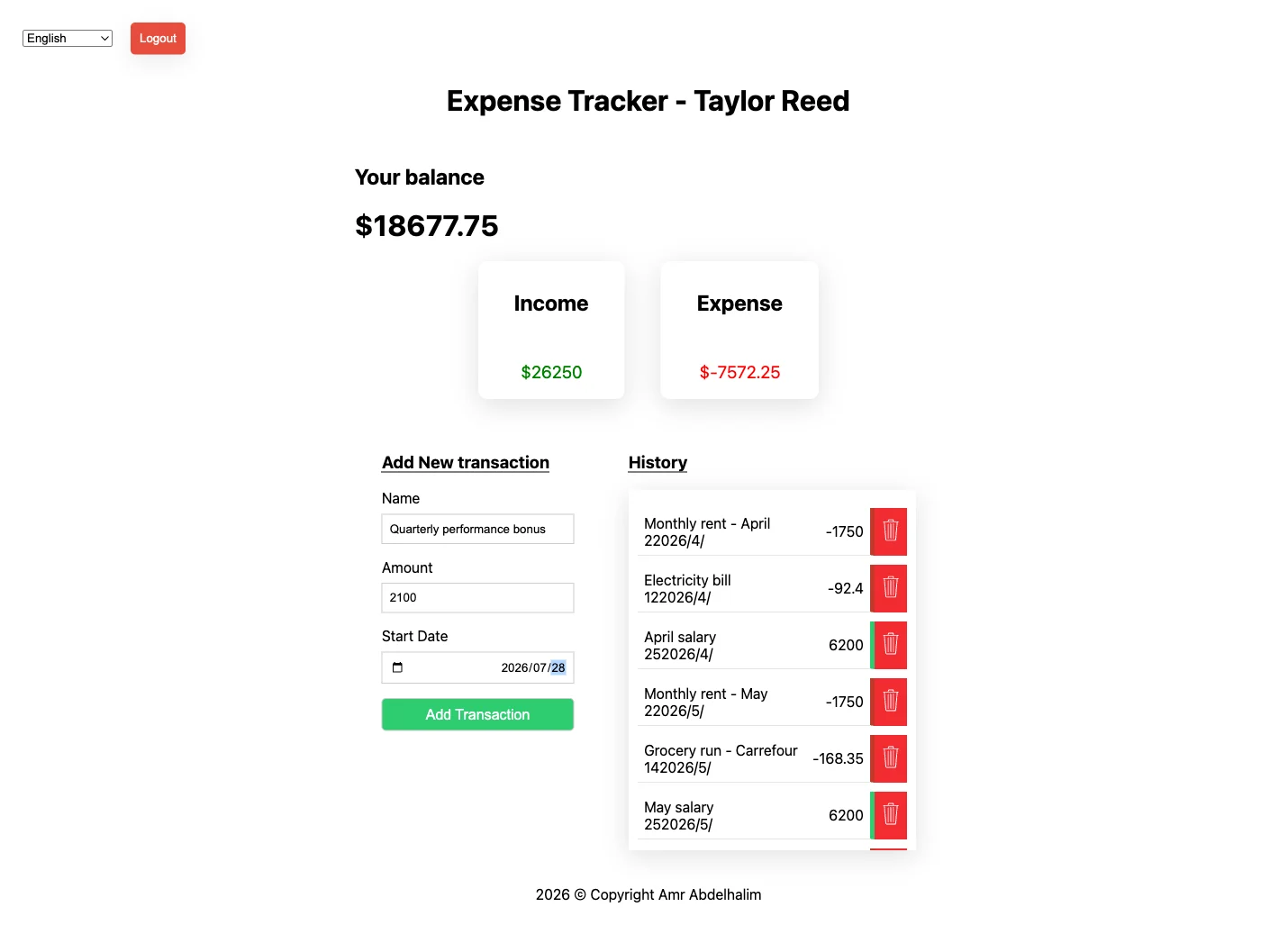
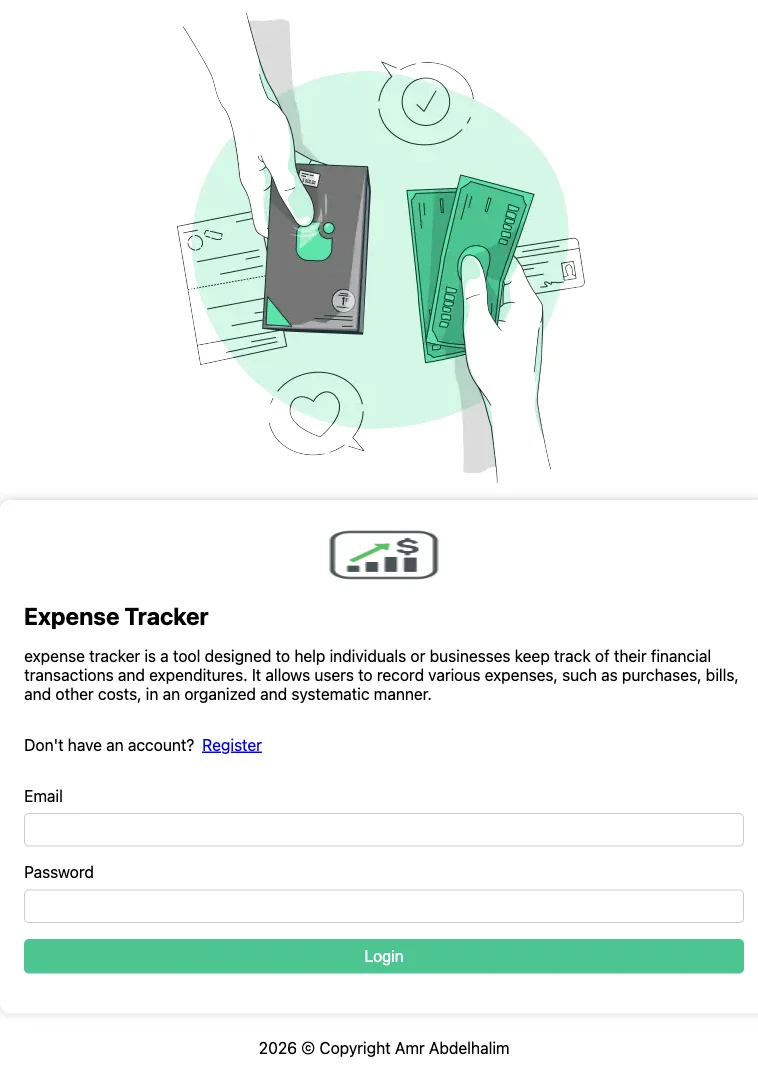
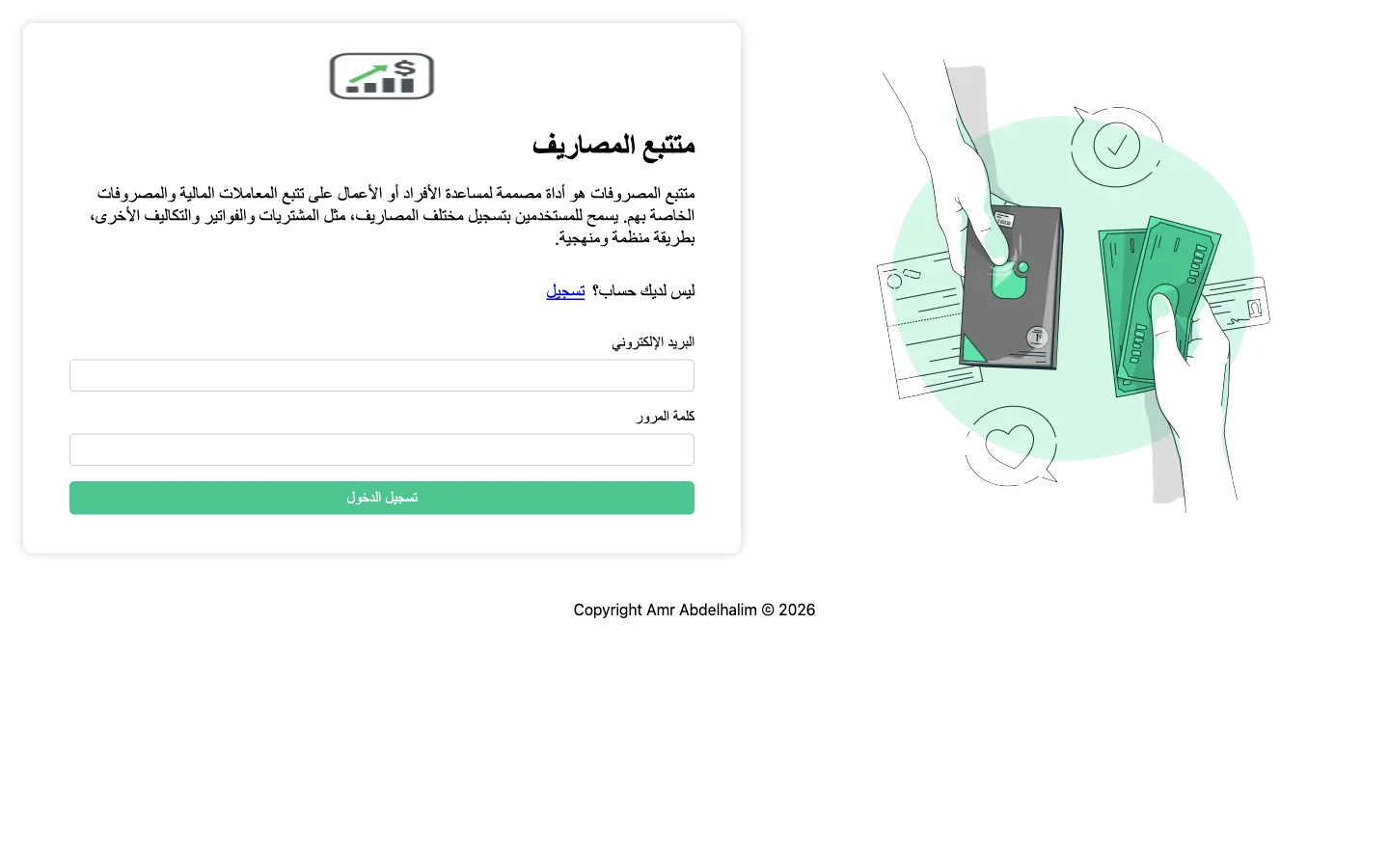
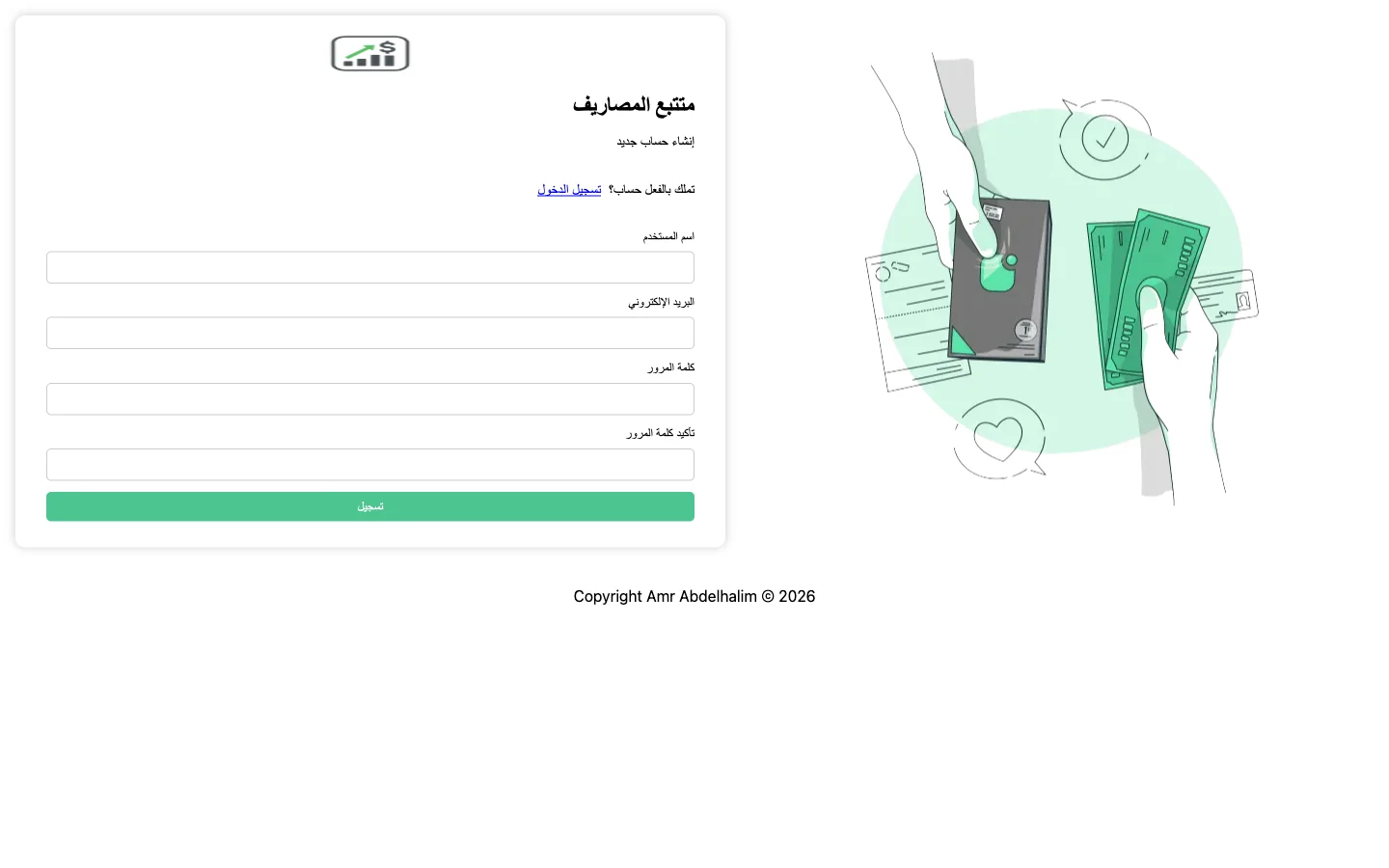
Image 1 of 8
Project Concept
A personal expense-management web app that supports account registration, login, and recording named financial transactions with an amount and date per user — each user can only see, edit, and delete their own transactions, with no cross-account leakage. The total balance is calculated as the arithmetic sum of all amounts: positive values count as income, negative values as expenses.
What the Interface Shows
The gallery shows the dashboard in both English and Arabic (same data, a fully mirrored RTL/LTR layout), with a color-coded balance/income/ expense summary (green for income, red for expenses), an add-transaction form, and a history list with delete controls. The login and registration screens share a consistent split layout — a financial illustration alongside an elevated form card.
My Role and Decisions
When I found a real JWT secret leaked in the repository’s Git history, I
chose to rewrite the entire history rather than adding a deletion
commit — a deletion alone would still leave the secret visible in old
commits. The first rewrite attempt failed because the secret got
written into the new Git object database during a checkout step before
removal, so I switched to exporting the tree outside Git, sanitizing it
there, and only then adding it. When triaging dependency
vulnerabilities, I found an advisory in Sharp (a Next.js dependency)
with no safe update available — instead of waiting or ignoring it, I
checked whether the app actually processes any user-supplied images,
found that its only next/image usage is two static images, and
accepted the exception with that evidence instead of forcing a risky
upgrade. I also pinned the Node.js runtime to 24.x specifically to stay
within Next.js 16’s officially supported range on Heroku.
Technical Aspects
A unified Next.js App Router application (frontend and API routes
together), MongoDB via Mongoose with two models (User and Transaction,
linked by a reference and an index on userId), JWT authentication
using HS256 through jose, and password hashing with bcrypt. The
GitHub Actions pipeline runs an isolated MongoDB service for tests and
gates the Heroku deployment on passing a quality gate (dependency
audit, lint, tests, build). A separate Docker image bundles the app
with a local MongoDB instance in one image, starting from an empty
database.
Project Value in the Portfolio
This project demonstrates a real response cycle to a security problem (discovering a leaked secret, a failed first remediation attempt, and correcting the method), not just a “we did X” narrative. It also shows an evidence-based decision (accepting a vulnerability only after confirming there was no real exploitation path) rather than a default assumption.
Related projects
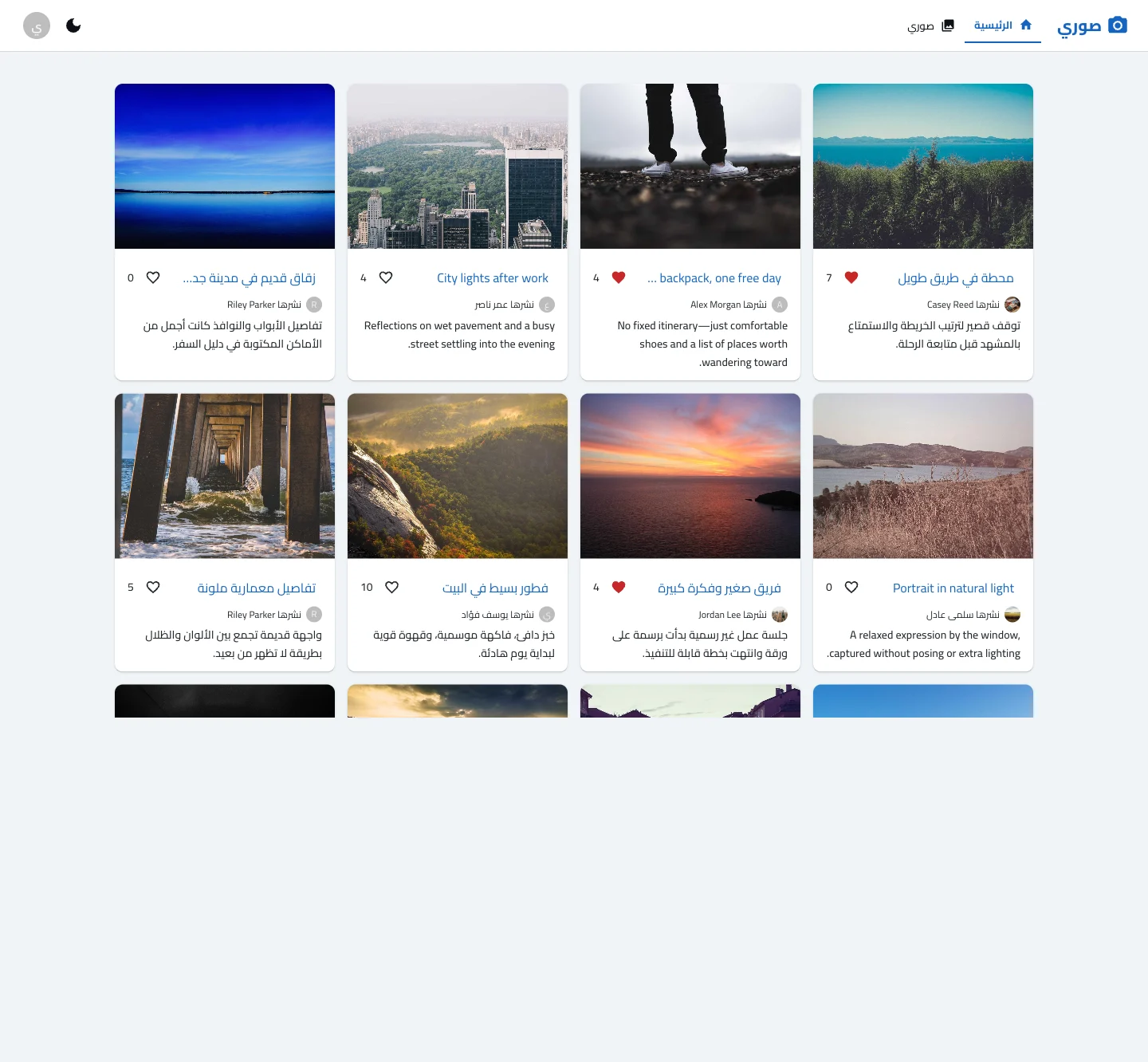
Photo Sharing Web App
A social photo-sharing platform with a public feed and likes, dark and light modes, built with Next.js, MongoDB, and Cloudinary for image storage.
Read more: Photo Sharing Web App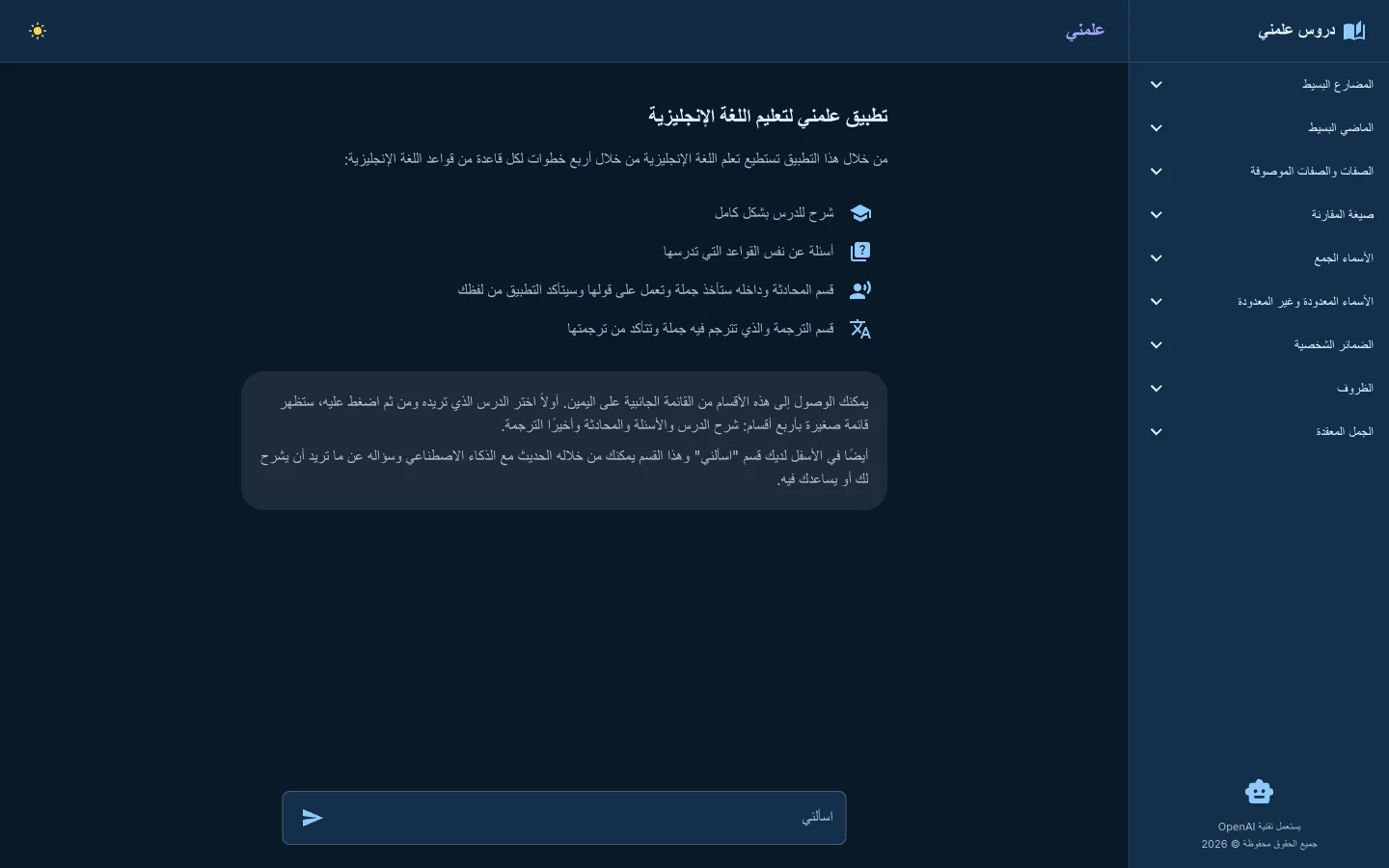
AI-Assisted English Learning App
An AI-powered English-learning assistant for Arabic speakers, with lessons, quizzes, translation, and pronunciation practice, with no accounts or persistent storage.
Read more: AI-Assisted English Learning App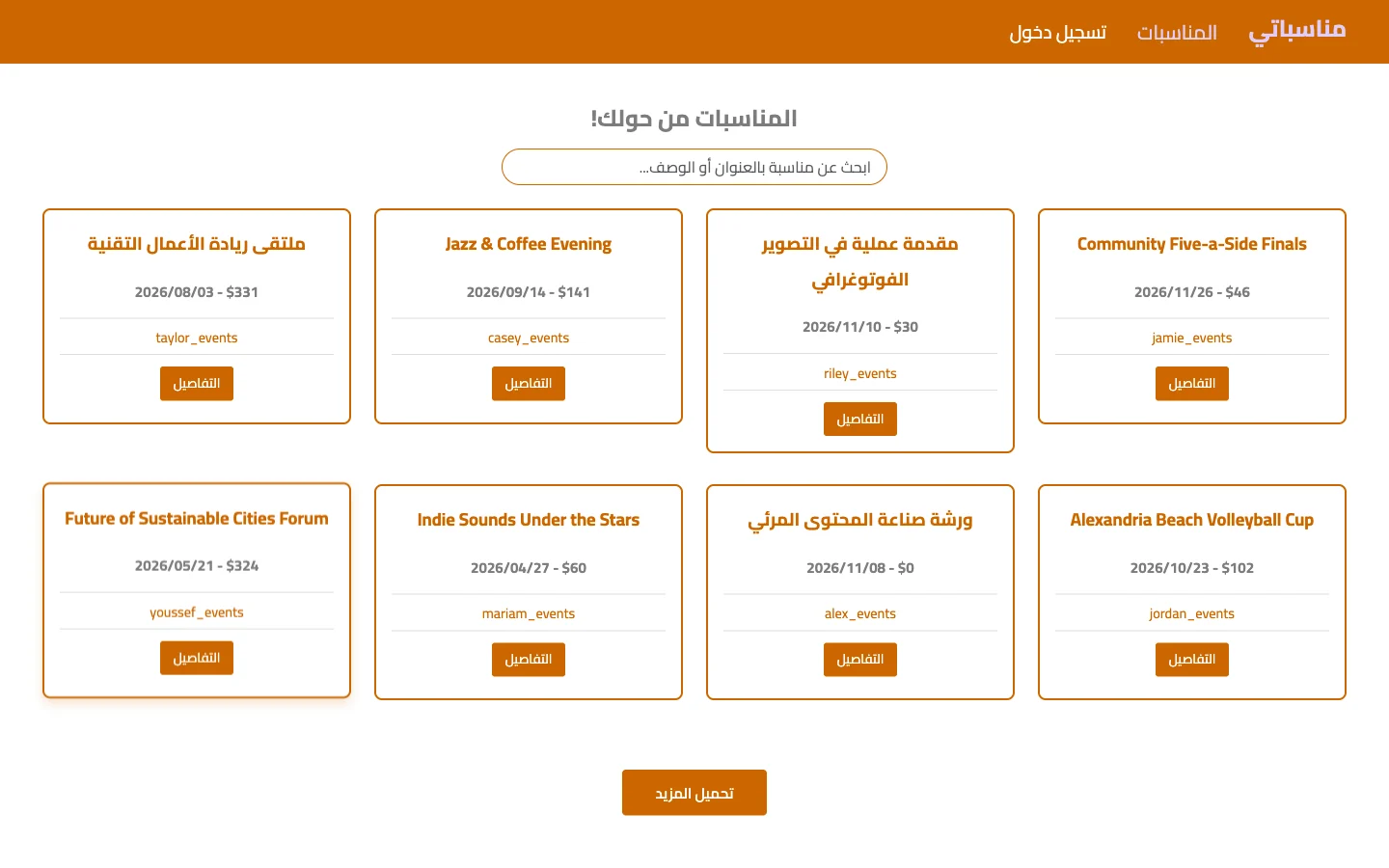
Event Booking Platform
An event-booking platform with a GraphQL API, browsing, search, booking, cancellation, and real-time activity via GraphQL Subscriptions.
Read more: Event Booking PlatformRelated services

Full-Stack Web Application Development
End-to-end web applications that connect responsive interfaces, APIs, authentication, and databases into practical product workflows.